
Hot Thermoplastic Paint: Durability Metrics in Harsh Climates
The ideal chemical equations for preserving road marking reflectance life under heavy-vehicle traffic and severe winter conditions.
Behind peeling and chipping, among the biggest problems in road marking coatings, there is usually a mismatch between ground temperatures and the material applied. TS EN 1871 standards define not only the colour of the material but also its road adhesion dynamics.
The Role of Climate in Thermoplastic Formulas
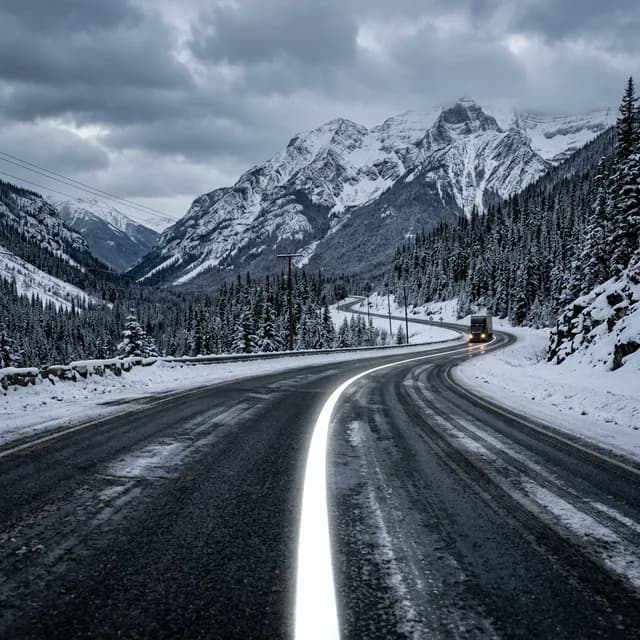
For an application to meet its expected reflectance life in the field (R1–R5 class), bonding into the surface at the moment of application must be perfect. Especially in harsh climates with large day/night temperature differences such as Erzurum and Sivas, or at toll plazas where dense traffic creates braking torque, hot thermoplastic materials with a flexible molecular structure (Thermo Series) should be preferred over cold acrylic systems.
A good paint does not merely cling to the substrate; it forms a chemical bond with it and becomes an organic part of the asphalt.
Thermal Expansion and Resin Quality
When the temperature drops to −20 degrees, standard resins vitrify and become brittle. At the first blade strike of a snowplough, the paint breaks off the road. The elastomer-modified resins used in Renga Plus formulations, however, expand and contract together with the asphalt and absorb these mechanical impacts.
Application Recommendation: An asphalt temperature of at least 10°C during application and a laying temperature of exactly 200°C are critical for activating the binders within the material.